

People
People
Join the Lab
Join the Lab
The Geo-CARE Lab welcomes motivated M.S. and Ph.D. students, and undergraduates looking for research experience, in geotechnical engineering, computational mechanics, energy geotechnics and natural-hazard resilience. Strong candidates have a background in civil or geotechnical engineering and an interest in experimental work, numerical modeling or machine learning.
If you are interested, email Dr. Tiwari with your CV, transcripts and a short note on the research questions that excite you.
Director, Geo-CARE Laboratory

Dr. Nitin Tiwari, Ph.D.
Assistant Professor
Dr. Nitin Tiwari is Director of the Geo-CARE Laboratory and an Assistant Professor of Geotechnical Engineering in the School of Civil, Environmental, and Infrastructure Engineering at Southern Illinois University Carbondale, Illinois, USA. His research reveals how freezing, chemical reactions and changing loads reshape the mechanics of soils and rocks, and turns that understanding into physics-informed machine learning models that predict how the ground beneath our infrastructure will behave. His group also advances 3D printing for construction, from printable earth-based materials stabilized with biopolymers and fibers to underwater 3D concrete printing for marine and offshore infrastructure. He has authored 23 journal articles, 14 conference papers and 2 book chapters, cited 1,213 times (h-index 15), holds 4 granted patents, and has delivered 19 invited lectures, keynotes and workshops. His recognitions include the Young Scientist Award in Civil Engineering from the Madhya Pradesh Council of Science and Technology and the Best Research Award from IIT Indore (both 2021), and a Ministry of Education (India) teaching assistantship that funded his doctoral studies. As an early-career faculty member he was selected for the ADSC Faculty Workshop and has received competitive travel grants and awards, several funded by the U.S. National Science Foundation, for the NHERI DesignSafe Summer Institute for Early-Career Faculty, the NHERI RAPID workshop, the NHERI@UTexas workshop on field nonlinear cyclic shear measurements in soil, the GEER workshop at ASCE, the USUCGER Early Career Workshop and the Civil Underground “Teach the Professors” program. He also served on the Transportation Research Board Standing Committee on Geosynthetics (AKG80).
- 23Journal articles
- 4Patents granted
- 1,213Citations
- 15h-index
- 19Invited talks
His work spans five connected areas:
- Frozen ground and flood protection: freeze–thaw damage, and winter uplift and piping beneath levees.
- Geomechanics for the energy transition: enhanced geothermal systems, CO₂ storage, and critical-mineral recovery from brines.
- Low-carbon ground improvement: MgO carbonation and bio-mediated soil stabilization.
- Physics-informed machine learning for geomechanics: neural constitutive models that respect thermodynamics, and inversion of field data with quantified uncertainty.
- 3D printing for construction: printable earth-based materials stabilized with biopolymers and fibers, and underwater 3D concrete printing for marine infrastructure.
Education
- Ph.D., Geotechnical Engineering, Indian Institute of Technology Indore, 2021
- M.Engg., Structural Engineering, University Institute of Technology, Rajiv Gandhi Technical University, Bhopal, India, 2017
- B.Engg., Civil Engineering, Rajiv Gandhi Technical University, Bhopal, India, 2014
Professional Experience
- Assistant Professor and Director, Geo-CARE Laboratory, Southern Illinois University Carbondale, USA (08/2024–present)
- Postdoctoral Research Assistant, Lyles School of Civil and Construction Engineering, Purdue University, IN, USA (02/2022–08/2024)
- Institute Postdoctoral Researcher, Department of Civil Engineering, IIT Bombay, India (10/2021–01/2022)
- Postdoctoral Research Associate-I, Department of Civil Engineering, IIT Indore, India (05/2021–10/2021)
Current Students
5Graduate researchers advancing the lab's work on resilient, sustainable geotechnical infrastructure.
-
Subin studies how wildfires set the stage for debris flows. He is building a multi-temporal framework to assess debris-flow hazard in the months and years after a fire, and physics-informed neural networks that pair machine learning with the mechanics of debris flows to sharpen hazard prediction.
Publications 1 +1 under consideration
- 2027Non-Landslide Sampling Strategies in Post-Wildfire Landslide Susceptibility Modeling: Insights from the San Gabriel Complex FireASCE2027: The Engineering and Infrastructure Experience, Philadelphia, PA, March 1–5, 2027 Conference Accepted for poster presentation
- In reviewThe Confining Stress Paradox in Freeze-Thaw Durability of Cement- and Lime-Stabilized Fine-Grained Soils: Separating Stress During Freezing from Stress During ShearingCold Regions Science and Technology Journal Under review
-
Bijay investigates what freezing does to cemented soils. His thesis tracks how freeze–thaw cycles break the bonds between soil particles and, with them, the strength, deformation and durability of stabilized ground, work aimed at more resilient infrastructure in cold regions as the climate changes.
Publications 7 +3 under consideration
- 2027Particle Scale Simulation of Frost Damage in Cemented Soils: Role of Confining Stress Using Discrete Element MethodASCE2027: The Engineering and Infrastructure Experience, Philadelphia, PA, March 1–5, 2027 Conference Accepted for poster presentation
- 2027Frost Damage Under Pressure: Rethinking Freeze-Thaw Testing of Cemented Soils Through Confined Triaxial ExperimentsASCE2027: The Engineering and Infrastructure Experience, Philadelphia, PA, March 1–5, 2027 Conference Accepted for poster presentation
- 2026Integrating Geothermal Energy, Carbon Storage, and Critical-Mineral Recovery: A Multi-Benefit Subsurface PlatformIllinois Innovation Network (IIN) Conference 2026: Powering Illinois' Future Together, SIU Edwardsville, Edwardsville, IL, October 22–23, 2026 Conference
- 2026Freeze-Thaw Damage in Granular Geomaterials Integrating Pore-Scale Thermodynamics with Contact-Network DegradationIllinois Innovation Network (IIN) Conference 2026: Powering Illinois' Future Together, SIU Edwardsville, Edwardsville, IL, October 22–23, 2026 Conference
- 2026An algorithmic finite element framework for layer-by-layer 3D printing of fiber-reinforced stabilized geomaterialsAdvances in Engineering Software, 222, 104299 — special issue on Multiphysics Modeling Journal
- 2026Freeze-thaw damage in granular geomaterials integrating pore-scale thermodynamics with contact network degradationJournal of Rock Mechanics and Geotechnical Engineering Journal
- 2026Nexus of enhanced geothermal systems, carbon sequestration, and critical minerals recovery: A comprehensive review of multi-benefit subsurface resource platformsRenewable and Sustainable Energy Reviews, 236, 116986 Journal
- In reviewTime-dependent frost destructuration of cemented soil through hydraulic memoryGéotechnique — Special Issue: Time-dependent soil behaviour in multi-coupled problems Journal Under review
- In reviewFrozen landside ground as a transient blanket: underseepage uplift, crust cracking and piping conditions beneath leveesActa Geotechnica Journal Under review
- In reviewThe Confining Stress Paradox in Freeze-Thaw Durability of Cement- and Lime-Stabilized Fine-Grained Soils: Separating Stress During Freezing from Stress During ShearingCold Regions Science and Technology Journal Under review
-
Sazzad works where geothermal energy meets construction. One project develops integrated frameworks to recover critical minerals from geothermal brines while storing CO₂ in the same systems, supporting clean energy and resource security. The other studies underwater 3D concrete printing: how printable cementitious mixtures can be placed and cured below water to build and repair marine and offshore infrastructure.
Publications 3 +3 under consideration
- 2027Numerical Analysis of Coupled Stress-Temperature Effects on Fracture Network Evolution and Heat Extraction in Geothermal ReservoirsASCE2027: The Engineering and Infrastructure Experience, Philadelphia, PA, March 1–5, 2027 Conference Accepted for podium presentation
- 2026Integrating Geothermal Energy, Carbon Storage, and Critical-Mineral Recovery: A Multi-Benefit Subsurface PlatformIllinois Innovation Network (IIN) Conference 2026: Powering Illinois' Future Together, SIU Edwardsville, Edwardsville, IL, October 22–23, 2026 Conference
- 2026Nexus of enhanced geothermal systems, carbon sequestration, and critical minerals recovery: A comprehensive review of multi-benefit subsurface resource platformsRenewable and Sustainable Energy Reviews, 236, 116986 Journal
- In reviewTime-dependent frost destructuration of cemented soil through hydraulic memoryGéotechnique — Special Issue: Time-dependent soil behaviour in multi-coupled problems Journal Under review
- In reviewFrozen landside ground as a transient blanket: underseepage uplift, crust cracking and piping conditions beneath leveesActa Geotechnica Journal Under review
- In reviewThe Confining Stress Paradox in Freeze-Thaw Durability of Cement- and Lime-Stabilized Fine-Grained Soils: Separating Stress During Freezing from Stress During ShearingCold Regions Science and Technology Journal Under review
-
Khymeng is developing low-carbon soil stabilization with reactive magnesia. He carbonates MgO-treated soils with sodium bicarbonate, without any gaseous CO₂, and combines unconfined compression and repeated-load triaxial tests with electron microscopy and reaction-path modeling of the pore solution to explain how carbonate cement forms and why stiffness changes with curing. The work links pore-scale chemistry to the resilient modulus used in pavement foundation design and weighs the environmental effects of the sodium carbonate brine.
Publications 1 +4 under consideration
- 2027Bicarbonate-Activated MgO Carbonation for Accelerated Subgrade StabilizationASCE2027: The Engineering and Infrastructure Experience, Philadelphia, PA, March 1–5, 2027 Conference Accepted for podium presentation
- In reviewTime-dependent frost destructuration of cemented soil through hydraulic memoryGéotechnique — Special Issue: Time-dependent soil behaviour in multi-coupled problems Journal Under review
- In reviewFrozen landside ground as a transient blanket: underseepage uplift, crust cracking and piping conditions beneath leveesActa Geotechnica Journal Under review
- In reviewThe Confining Stress Paradox in Freeze-Thaw Durability of Cement- and Lime-Stabilized Fine-Grained Soils: Separating Stress During Freezing from Stress During ShearingCold Regions Science and Technology Journal Under review
- In reviewThermodynamic Ceiling on MgO Carbonation by NaHCO3 in Stabilized Soil and Its Resilient StiffnessJournal of Geotechnical and Geoenvironmental Engineering, ASCE Journal Under review
-
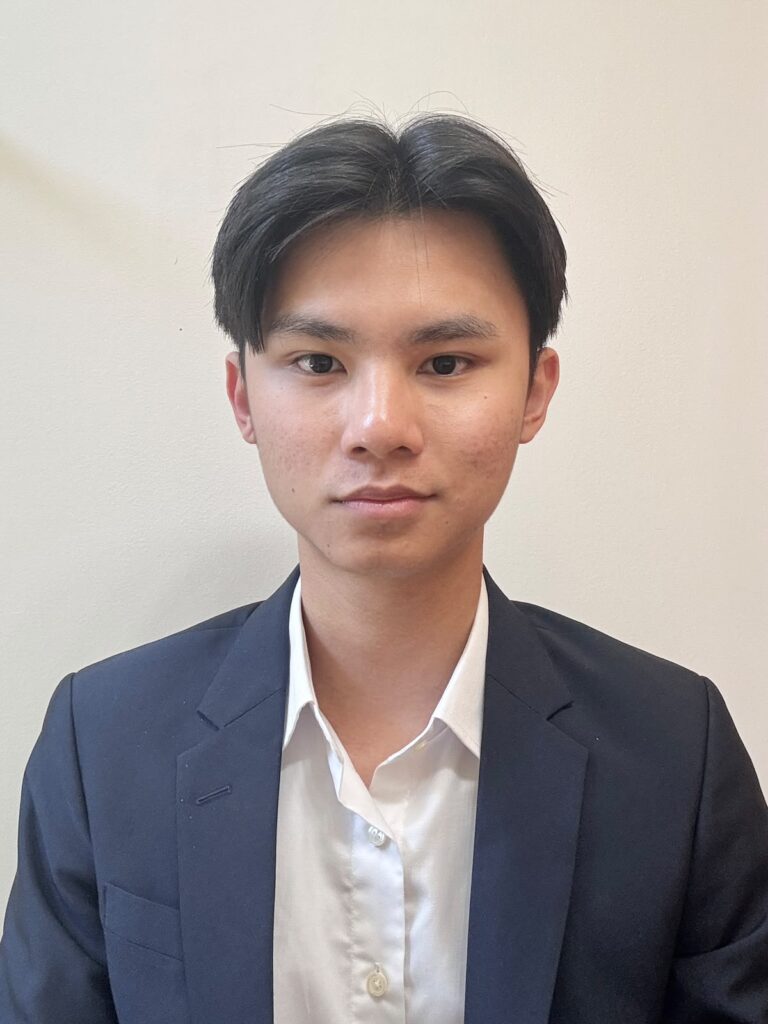
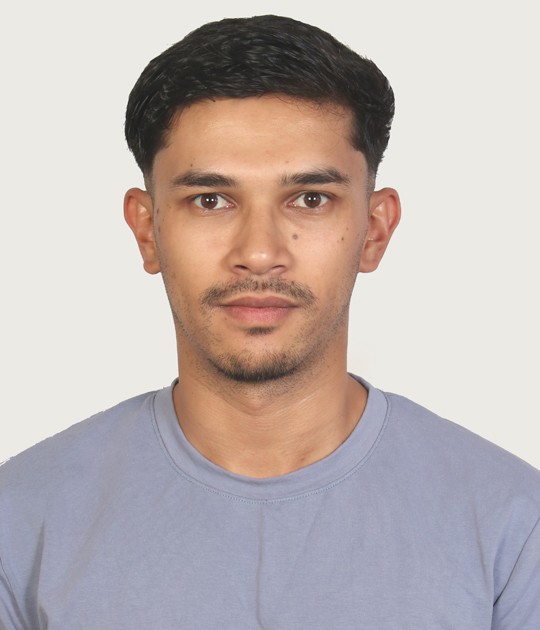
Safal studies how freezing and thawing of the landside ground changes underseepage beneath levees. His research aims to make flood protection safer in cold regions, where a frozen crust can trap seepage pressure and trigger uplift and piping.



Alumni
1Former lab members and where their research has taken them.
-

Suvechha completed her M.S. thesis research in the Geo-CARE Lab, where she explored the potential of biopolymers to enhance soil properties with the goal of developing soil as a printable material for advanced 3D printing applications. Her work aligned with cutting-edge efforts in Mars mission housing, which is being developed through 3D-printed habitats made from Martian materials and inflatable structures. This research contributes to sustainable construction solutions on Earth and supports visionary extraterrestrial habitat development using local resources.
Thesis Mix Design, Printability, and Structural Buildability of Bio-Polymer and Fiber Modified Earthen Composites for Extrusion-Based 3D Printing in Construction
Publications 5 +1 under consideration
- 2026Freeze-Thaw Damage in Granular Geomaterials Integrating Pore-Scale Thermodynamics with Contact-Network DegradationIllinois Innovation Network (IIN) Conference 2026: Powering Illinois' Future Together, SIU Edwardsville, Edwardsville, IL, October 22–23, 2026 Conference
- 2026An algorithmic finite element framework for layer-by-layer 3D printing of fiber-reinforced stabilized geomaterialsAdvances in Engineering Software, 222, 104299 — special issue on Multiphysics Modeling Journal
- 2026Freeze-thaw damage in granular geomaterials integrating pore-scale thermodynamics with contact network degradationJournal of Rock Mechanics and Geotechnical Engineering Journal
- 2026Evaluating the printability and buildability of earth-based fiber–biopolymer composites for 3D printing applicationsScientific Reports, 16(1), 27439 Journal
- 2026Printability and Structural Integrity of Fiber-Reinforced Earth-Based Materials for 3D PrintingGeo-Congress 2026, 532–543 Conference
- In reviewThe Confining Stress Paradox in Freeze-Thaw Durability of Cement- and Lime-Stabilized Fine-Grained Soils: Separating Stress During Freezing from Stress During ShearingCold Regions Science and Technology Journal Under review
